
Assigning routes
Add and prioritize Routes and Virtual Routes so a Workspace can send and receive communication traffic. For internal teams configuring a Workspace's messaging connections.
Add and prioritize routes and virtual routes so your Workspace can send and receive communication traffic.
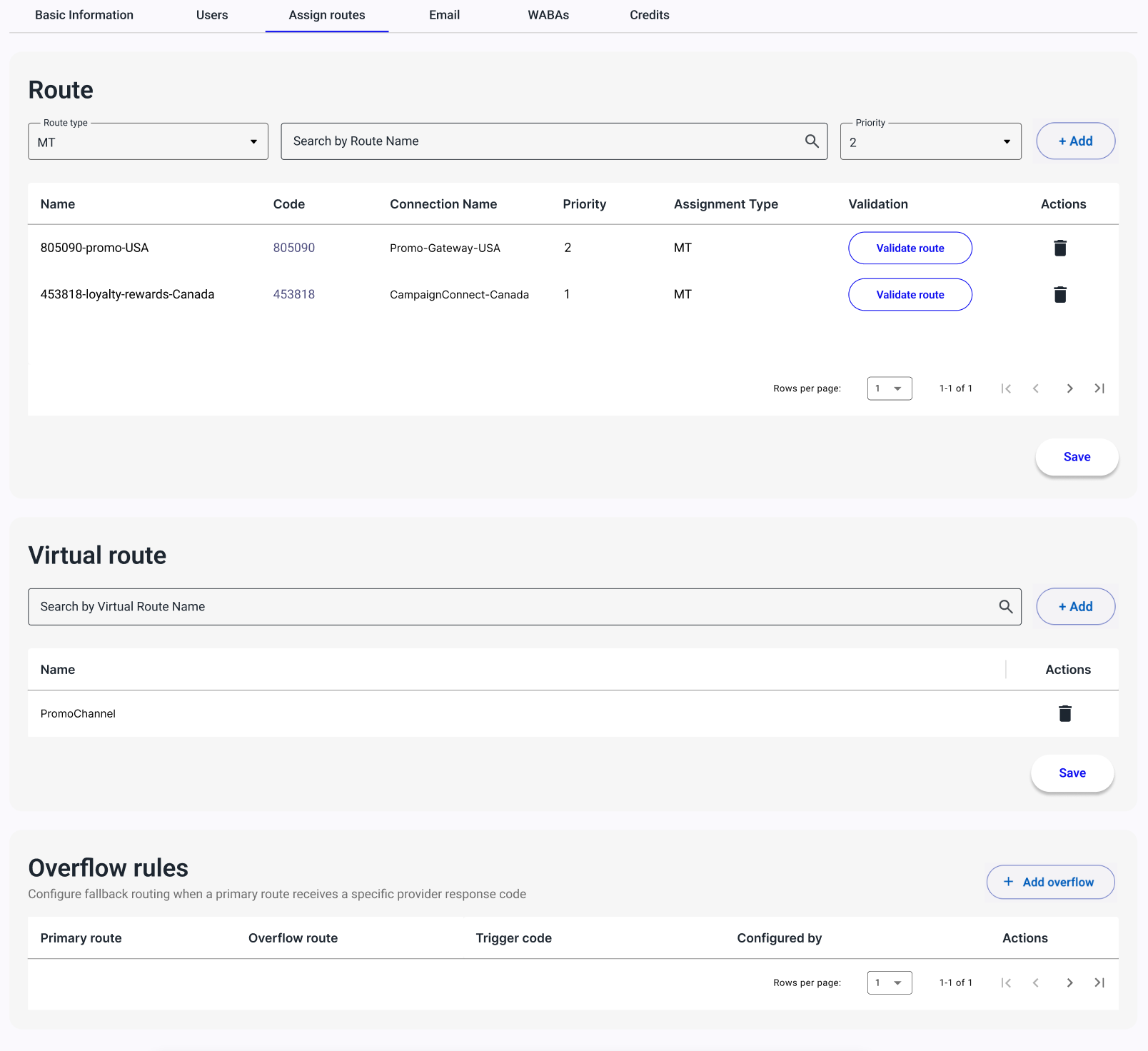
The Assign Routes tab has two sections:
-
Routes — A route is a predefined path that directs messages and communication traffic to their destination. Configure each route with a connection name, priority, and assignment type.
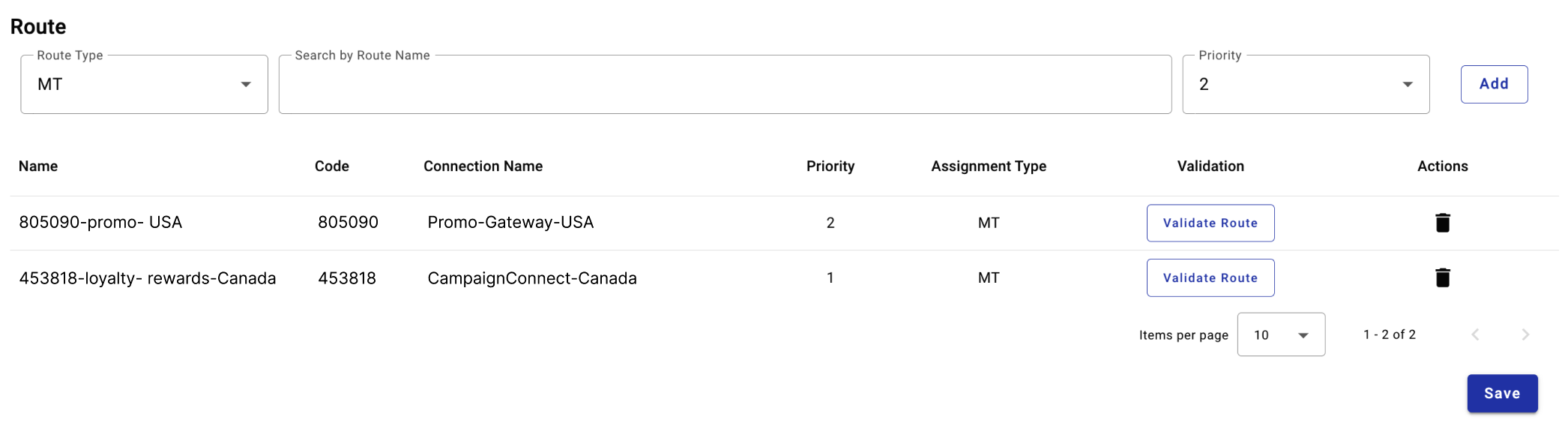
The Routes table includes the following columns:
- Name — Route name.
- Code — Route code number.
- Connection Name — Connection used by the route.
- Priority — Order in which the platform uses routes. Higher numbers have lower priority.
- Assignment Type — Message types the route handles: mobile terminated (MT), mobile originated (MO), or both.
- Validation — Test the route to confirm that it works correctly.
- Actions — Select the trash bin icon to remove the route.
-
Virtual Routes — A virtual route is a logical path that directs communication traffic without a physical connection. Virtual routes handle traffic within the platform's internal systems.
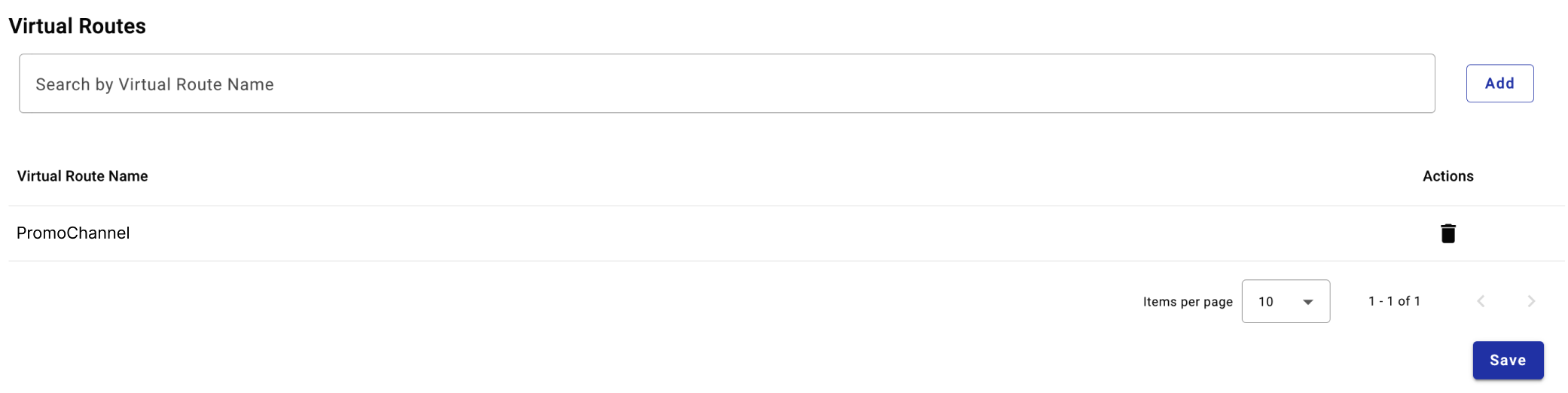
The Virtual Routes table includes the following columns:
- Name — Virtual route name.
- Actions — Select the trash bin icon to remove the virtual route.
Add a Route to the Workspace
Add a route to define how your Workspace handles MT, MO, or both message types.
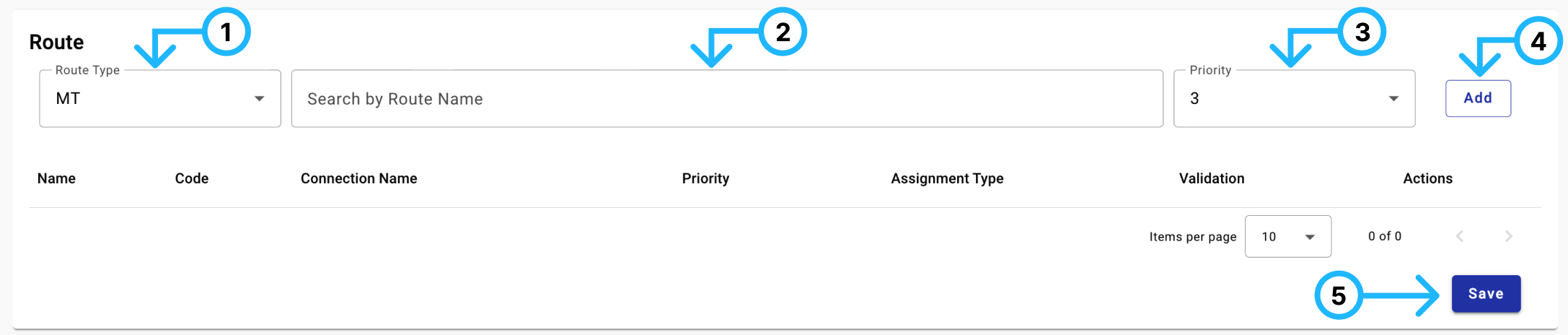
- From the Route Type dropdown, select Mobile Terminated (MT) or MT and Mobile Originated (MO).
- In Search by Route Name, enter a route name or select a route from the dropdown.
- From the Priority dropdown, select a priority. Higher numbers have lower priority.
- Select Add. The route appears in the Routes table.
- Select Save.
Add a virtual route to the Workspace
Add a virtual route to direct traffic through the platform's internal systems.
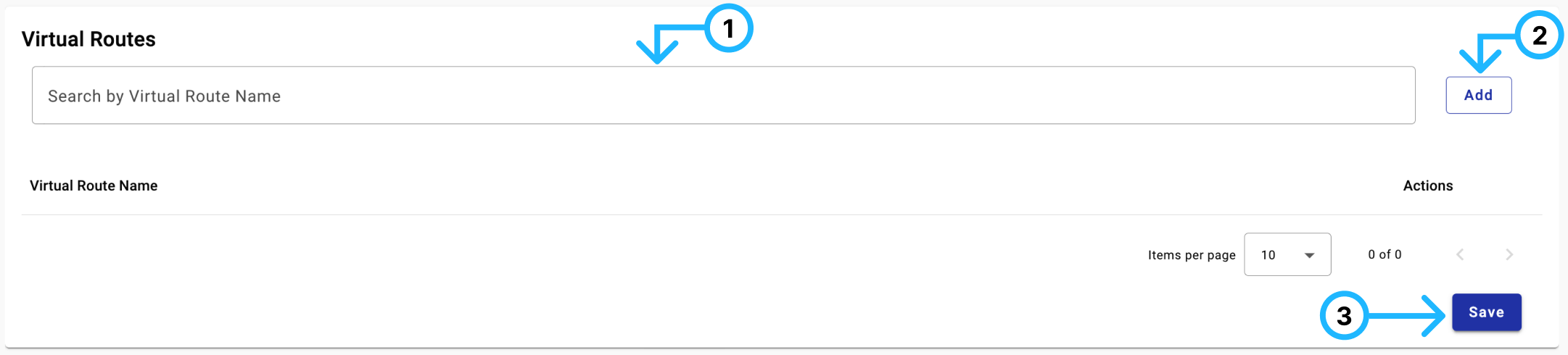
- In Search by Virtual Route Name, enter a virtual route name or select one from the dropdown.
- Select Add. The virtual route appears in the Virtual Routes table.
- Select Save.
The route or virtual route is now available in your Workspace.
Overflow rules
The Assign Routes tab also includes an Overflow rules section, where you can configure a route to automatically retry through a fallback route when the primary route receives a specific provider response code. See Configuring overflow rules.
Updated 16 days ago