
Personalize authentication message template
Configure an authentication WhatsApp Message Template with a one-time-password button for delivering verification codes. For teams sending OTPs that require per-language content in the Personalize step.
Mobile apps delivering one-time passwords or verification codes via WhatsApp must use an authentication message template with a one-time password button (OTP).
You configure the message to be delivered in the Personalize step. The Personalize pane displays the message template name, language tabs matching the Metadata step, and an emulated device screen.
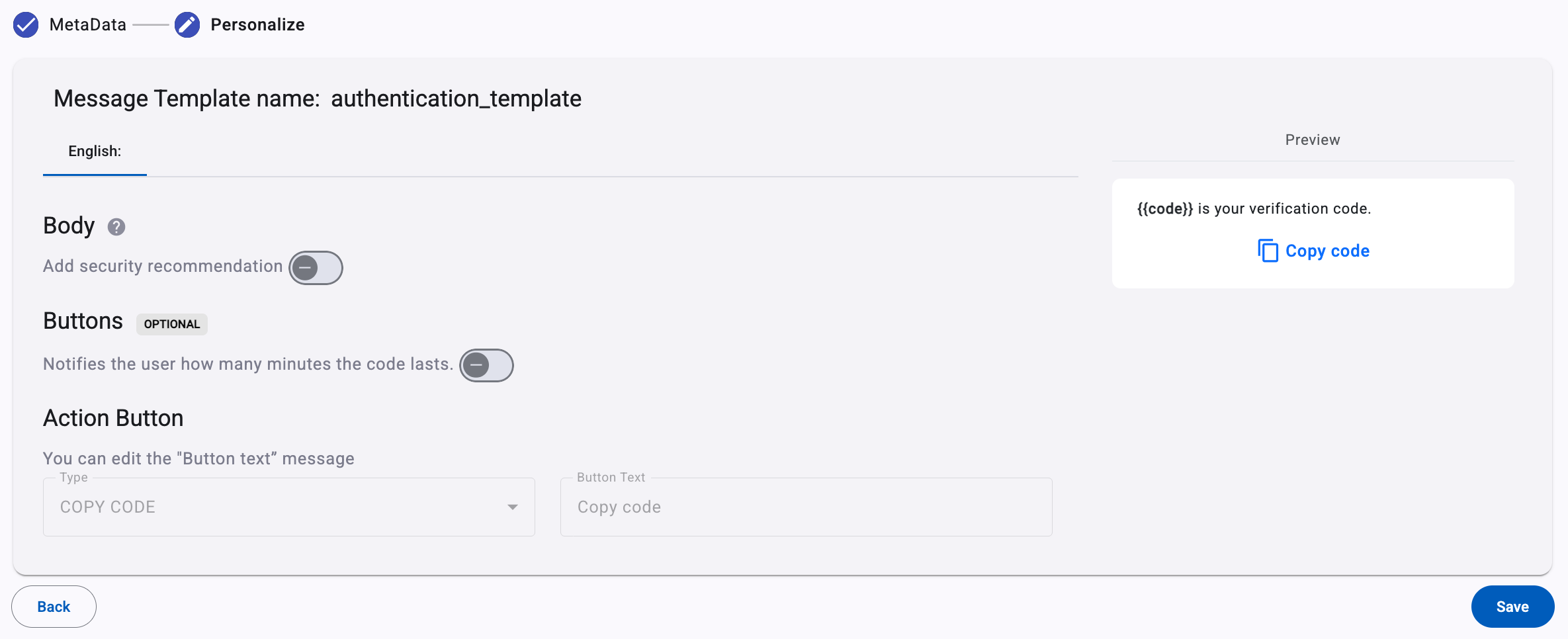
Each language tab content must be in the language that corresponds to the tab being configured. The English tab requires English content, the Spanish tab requires Spanish content, and so on.
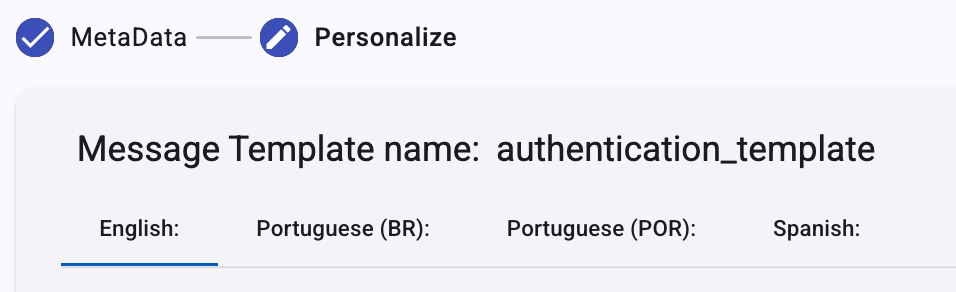
Each language tab includes four message template elements, from top to bottom:
• Body
• Footer (optional)
• Buttons
Message template components
Body
Meta defines the Body message. The body is fixed: "{{VERIFICATION_CODE}} is your verification code."
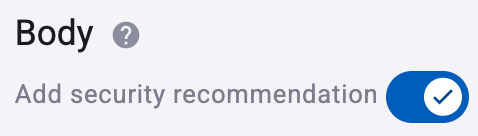
Meta also defines an optional security recommendation message: "For your security, do not share this code." You display the security message by sliding the Add security recommendation toggle to the right.
Buttons
The Buttons offer an optional Expiration warning message: "This code expires in {{NUM_MINUTES}} minutes." You display the expiration warning message by sliding the toggle to the right.
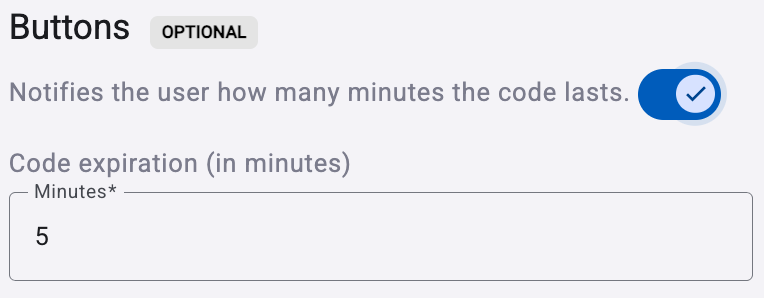
The default expiration time is 5 minutes. You decrease or increase the code expiration time by setting the desired minutes in the Minutes placeholder.
Action Button
Adding an Action button is required. Authentication message templates must include a copy code button.
A copy code button copies the one-time password or code to the user's clipboard. The user can then manually switch to your app and paste the password or code into your app's interface.
You type and edit the Button Copy Code text in the Button Text placeholder.

You save the Authentication message template by clicking Save. Once created, Meta assigns a quality status to the WhatsApp message template. The WhatsApp Message Template Quality Status section covers quality status details.
NOTEWhen configuring a WhatsApp authentication message template, it is not mandatory to create a column named "code" within the Contacts section of your Workspace account. This column must contain the unique authentication codes that will be sent to each recipient.
If you upload a CSV file that includes a "code" column, the platform will use the codes provided in that file when sending the authentication message template.
If a "code" column exists in the Contacts section and you upload a CSV file that also contains the code field when sending the message template, the system will prioritize the values from the uploaded CSV file over the existing values in the Contact list.
Failure to create and populate this column from the Contact list or CSV file before sending the authentication message template will result in an INCOMPLETE delivery status. This occurs because the platform cannot resolve the required variable (code) in the message content, leading to unsuccessful delivery attempts.
To ensure successful message delivery when using authentication message templates:
- Include a "code" column in your CSV file or ensure it exists in the Contacts section.
- Populate the column with the corresponding authentication codes for each recipient.
- Confirm the data is properly mapped before sending the broadcast or automation.
Updated about 2 months ago